Showing posts with label research. Show all posts

Monday, May 12, 2014

Referencing outdated research

I recently had to attend a speed awareness course (I know, I know - you're all paragons of driving virtue).

The delivery method for the course was chalk-and-talk with endless PowerPoint slides, almost all of which contained a list of bullet points. The instructors did their level best to make it interesting, and - to be fair - there was some solid content. But I can't help feeling that it might be time to explore some alternative delivery approaches. Perhaps this is a post for another day, but right now, I digress.

If you know anything about me, especially if you've read my recent post, you'll know how my brain imploded when one instructor tried to explain the psychology behind speeding in terms of the whole left brain/right brain thing. You'll be proud of me, though, because I didn't immediately challenge him to a duel. :)

I know I've only recently touched on this point, but it really set me to thinking. When all's said and done, this was a course about road safety. Imagine how their credibility would be damaged if they cited traffic ordinance that was as outdated as the left brain/right brain concept. Why do we put so much effort into one and not make the slightest effort about the other?

The company I work for provides (among other things) training in various safety-critical fields: working at height, working with high voltage, working in confined spaces, hazardous agents in the workplace, for example (and those are just the ones that pop into my head - there are hordes of others). Imagine if we trotted out outdated safety equipment, or cited outdated safety precautions. The results could be devastating!

The people who work in these areas make it their business to keep up to date with the latest information and legislation. They wouldn't dream of doing otherwise.

Why is it then, that there isn't the same level of commitment to keeping up with the research about how learning itself works? Why is it okay to trot out research that is decades old and out of date? To cite pop-psychology as if it were solid fact? To quote urban legends as 'evidence' that 'prove' the point you're trying to make?

Why isn't the learning world beating a path to Itiel Dror's door (for example)? Or Mo Costandi's? Or (while he was alive) John Geake's? In his presentations, Itiel often mentions how learning providers will feature a picture of a brain in their materials at various exhibitions. And when he asks how the product they're selling relates to the brain, the vendors are stumped. They know little about the brain, other than that learning happens there somehow or another.

I have to question the ethics of this. In other fields, professionals keep up with emerging research on pain of dire consequence: structural engineers, microbiologists, burn specialists, aerospace engineers, surgeons... and the world holds them to account. Why are we being allowed to get away with it?

Thursday, May 01, 2014

Keeping it valid

Centuries ago, people believed the world was flat. They don't (or most don't) believe that any more. So, if you were to chuck in a casual reference to the flat earth during a presentation you were doing to a client, or a roomful of attendees, you would immediately lose credibility. Clearly here is someone who does not have his/her finger on the pulse.

But the flat earth is an extreme example. There are other, more recent ones. In recent meetings, I have heard people make casual reference to the whole left brain/right brain thing as if it were indeed, still a thing. We used to think so. But now, thanks to the work of people like Prof John Geake (among others), we know that is simply not the case.

Similarly, I have heard people cite the example of how the Americans spent millions researching a pen that could write in the zero gravity of space, while the Russians just used a pencil. That illustration gets used to demonstrate why it is important not to overthink things, and that sometimes, the simplest approach is the best. While that may be sound advice, the story of the pen/pencil thing is bogus. The graphite in pencils is problematic in zero gravity, too.

Every single one of us has seen a Facebook share that tells us that a million shares will get this kid his heart transplant, or that Bill Gates will donate a dollar to X charity for every 'like' the photo gets. Truth is, no amount of sharing is going to get that kid a heart, and Bill Gates already donates millions to charity, but to the charities of his own choosing. And by sharing these things, a person reveals a level of naivete and - it has to be said - laziness.

It is always possible to check whether a story is true. There are several sites online where you can verify (or otherwise) the latest viral sharing trend. Hoaxslayer, Snopes, etc. It takes a matter of minutes.

It is also possible to check whether the earth is flat, whether global warming is real, whether fracking is harmful, whether nuclear energy is really clean, whether the Russians really did just use a pencil while the American spent millions developing the space pen. (Please note: I am not for a moment saying that all of these are myths. But you can check for yourself which are true and which are not.)

...and to see what the current thinking is on how the brain works, whether learning styles actually exist.

I am a learning professional. I try to keep abreast of current thinking and research in my field so that I don't discredit myself or my company by casually dropping an absolute clanger into a conversation with a client.

Whatever your field is, I genuinely believe you owe it to yourself to do the same.

Things that were once unequivocally true (the earth is flat; eating fat makes you fat) are being shown by emerging research to be not so very true after all (the earth is round-ish; processed carbs make you fat).

Information is everywhere, and it is impossible to keep on top of it all, but keep your eyes and ears open in the fields that interest you. And, in the field that pays your salary, make a conscious effort to keep up.

That's my advice.

Not that you asked for it.

Monday, January 17, 2011

On measuring empathy

The second episode of The Brain: A Secret History explores the issue of emotions: what they are, what role they play, etc.

It was interesting to note the conclusion that even 'rational' decisions are based upon emotional response, and that our ability to rationalise is impaired when we lose the ability to feel emotional responses.

But I was particularly interested in the area of empathy. Probably because I have a tendency to feel the emotions of others so powerfully, that it can have a disruptive effect on my own life. Michael Mosley was tested for empathy and found to be far from as empathetic as he had believed. But I would question the results of the test, and here's why.

The test involved exposing Mosley to a series of video clips of people being subjected to mild-to-moderate pain experiences (mainly being pinched on the back of the hand), and then being subjected to a comparable experience himself (he was smacked on the back of the hand with a ruler). His brain activity was measured during both activities and then compared. To what extent was the brain activity of his own pain replicated when he witnessed someone else's pain?

One major flaw in the experiment for me is the following: during the video clips, he did not seem to be shown the faces of the people being hurt. Just the physical act of the pinch. If empathy is about emotion, I suspect the replication sought would be more obvious if the subject were to see the manifestation of pain on the faces of the filmed subjects.

Furthermore, if empathy is about emotion, it is far more likely that an empathetic response would be exhibited when observing a subject experiencing emotional, rather than physical anguish. While I don't think I'd be terribly impressed to see one person pinch another, I can be utterly incapacitated by someone else's emotional trauma. The episode began with Mosley climbing into a small, dark, underground space, where he experienced genuine fear. I found my own heart rate and anxiety to be significantly elevated while watching him.

Of course, the tricky part here is that in order to assess the level of empathy, the subject has to observe someone else in emotional distress, and then be subjected to emotional distress him/herself.

This brings an issue of ethics into the story. One can hardly publicly humiliate people or give them news of a fictitious bereavement in the name of science. But perhaps it would be possible to ask for volunteers to enter the 'fear cave' after watching others do so. Perhaps one might also be able to establish a benchmark of the brain areas activated after a bereavement, and then to record brain activity of people watching someone who has been bereaved. It would be difficult, but surely not impossible to obtain suitable data and material without being unethical.

Just wondering....

Friday, January 07, 2011

A formative learning experience

A post bubbling out from today's earlier offering.

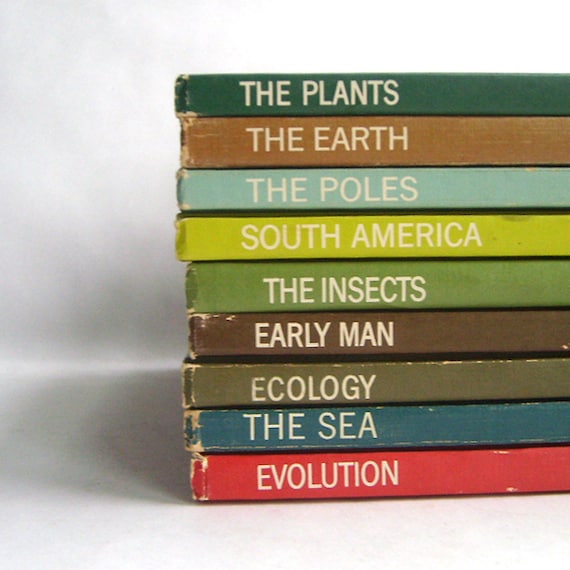
My mother was a bookworm. She was also a single, working parent from fairly early on. The education model in which I found myself during the earlier years of my school life involved a great deal of independent, investigative learning. Since it was a logistical nightmare to get me to the library to access reference books, my mother set about creating a reference section in our home library. This involved purchasing a set of encyclopaedia (World Book of Knowledge, if I remember correctly, since anything more upmarket was out of her reach), various text books and - joy of joys to my little heart - the Time Life Nature series.

From the age of about 7 or 8, I pored over those editions. I forget which one it was that explored things like colour blindness, dwarfism/gigantism and psychology (I think it was Evolution), but that was my absolute favourite. It literally fell apart from use. And I wanted to know more. I regularly hauled it out and subjected my poor mother to my own theories about the content, as well as myriad questions.

When I started studying learning theory as an adult, I found I already knew about Pavlov and Skinner. I had read and reread about them in my precious Time Life books. When I shared this with my lecturer, I was informed, with raised eyebrows, that I must have been a most precocious child.

I don't remember that being the case at all. I just remember being fascinated.

One of the experiments that featured in the book was Harry Harlow's work with baby Rhesus monkeys. These were taken away from their mothers and placed in enclosures where they had a choice between terry cloth or wire frame 'mother'. In one group, the wire mother was fitted with a milk bottle. In the other, it was the terry mother that was thus equipped. Without fail the monkeys preferred the covered option, even when it offered them no food. I remember reading the conclusion about the preference for a tactile experience and wondering whether the monkeys perhaps preferred the covered version because it offered them a hiding place of sorts, rather than because it was more cuddly.

It's very frustrating to be 8 and have no-one to ask about such things. But I remember wanting to know. I remember that drive. That endless exploration of a series of books which constitutes a landmark in my learning experience, and experience which carries on to this day.

How thrilled I was to find several photographs of the Time Life Nature series... with Evolution in every single one!

Tuesday, February 16, 2010

Will Thalheimer on learning styles

If you've been reading this blog for a while, it can't have escaped your notice that I am not an adherent of the concept of learning styles. I have written several blog posts and articles on the subject (I won't bore you by linking to them).

Like Donald Clark (to whom thanks for the pointer) I hope that this blog post from Will Thalheimer, and the research it cites will finally begin to draw a curtain on this silliness.

There is... a great gap from... heterogeneous responses to instructional manipulations—whose reality we do not dispute—to the notion that presently available taxonomies of student types offer any valid help in deciding what kind of instruction to offer each individual.
Enough now.

Wednesday, August 19, 2009

Good doll, bad doll

Linda Hartley shared this link via Twitter today. It broke my heart. No child should ever be given the impression that they are bad or ugly. Just look at these precious little faces as they effectively write themselves off as both of these things! These kids need a dose of Maya Angelou!


What are we teaching our children?

Wednesday, June 03, 2009

Sharing a story about a garden

Thanks to Dave Snowden for this link. I am excited about the aggregation of subjective anecdotes (using SenseMaker™) that form the heart of this piece of research. The researchers have asked contributors to share a story about their garden... or any garden. It can be a positive or a negative experience.

Why not add your perspective?

Wednesday, March 11, 2009

LPoD - Narrative inquiry

I wish I could write enough about this point to reflect how much I have been thinking and learning about it lately. It isn't really the learning point of a single day. It is an on-going process. Because I am adopting a (first person) narrative inquiry approach for my dissertation, I have been trying to find out as much as possible about it.

This is the way I go about things. I didn't know that there was an established methodology called first person narrative inquiry. I just felt very strongly that this was the right way to go about presenting my work. Only once I was defending my case to my dissertation supervisor did I learn that others had trod that path afore me. She sent me in search of materials to reference in my rationale.

I came across a few choice pieces:
Clandinin, D Jean and Connelly, F Michael. 2000. Narrative Inquiry - experience and story in qualitative research. Jossey-Bass. ISBN 0-7879-4343-6.
Farrands, Robert Miles. 2007. Excitement, bewilderment and emergence: exploring a life world through writing as first person inquiry
Whitehead, Jack. 1988. Creating a living educational theory from questions of the kind, 'How do I improve my practice?' Cambridge Journal of Education, Vol 19, No1, 1989, pp 41-52. Accessed online 12 November 2008.

As I have been reading these, I have become enthused all over again for the narrative approach. I was excited almost to the point of tears (pathetic, isn't it?) by the title of Whitehead's paper, because this is exactly the question I have wanted to explore in respect of my own professional practice: How has the use of social media affected my professional practice? In particular, I want to look at it from a learner's perspective, since altogether too much research addresses the teacher's perspective.

There are great wadges of text I would love to lift right out of Clandinin's book, but that would leave little place for my own writing in between! Take for example, these gems:

"Educators are interested in life... learning and teaching and how it takes place...the leading out of different lives, the values, attitudes, beliefs, social systems, institutions and structures, and how they are all linked to learning and teaching"

"For Dewey, education, experience, and life are inextricably intertwined. When one asks what it means to study education, the answer - in its most general sense - is to study experience."

"People live stories, and in the telling of these stories, reaffirm them, modify them, and create new ones. Stories lived and told educate the self and others, including the young and those such as researchers who are new to their communities."

"People are individuals and need to be understood as such, but they cannot be understood only as individuals. They are always in relation, always in a social context."
Can I get an Amen? Tell me I'm not the only one who wants to stand up and cheer... please?

And, of course, because I think in analogies, this immediately brings to mind a vivid image for me. Because research tends to pick a narrow focus, you get a whole load of in-depth, highly detailed pictures, like exquisitely wrought beads. But narrative inquiry provides the string that turns those beads into a beautiful necklace. Each bead has its place among the other beads, and each either complements or clashes with other beads on the string.

My head is brimming and buzzing with stuff on the subject, but I think I'll do a more complete exploration in the dissertation itself.

I'm such a geek. This stuff really gives me such a buzz!

I know I've said it before. It isn't about the learning. It's about the learner. The person.

Contented geeky sigh.

Friday, February 27, 2009

LPoD - Whitehead on living educational theory

I found this paper by Jack Whitehead some time ago and tagged it half-heartedly in Diigo. I was in the Slough of Despond at the time and only just had the presence of mind to realise that this was an important paper.

Today, I've been reading it through again and am so pleased that I tagged it to come back to. Whitehead argues:

that a living educational theory of professional practice can be constructed from practitioner's enquiries of the kind, 'How do I improve my practice?'
And that question comes up time and again throughout the paper: how do I improve my practice here? As responsible learning professionals, this is a question we should be asking ourselves time and again. And it is in the ongoing, iterative search for the answer to that question that, as Whitehead puts it "a living educational theory will be produced"

Let's consider that this paper was written in 1988. Is it fair to say that his prediction has been realised in Connectivism?

One of the issues which is hamstringing me in my research paper is that of validity. In several spaces (including this one) I have asked for pointers to rigorous research being conducted into the theory of Connectivism. Thus far I have heard not a squeak. Does this mean that no-one is researching the theory? If this is the case, how do I address it in the conext of an Academic paper?

I think Whitehead might again have come to my rescue in his response to questions 4-6 in his paper, although I confess I am still trying to get my head around what he's saying (bear of little brain, you understand), but this section gives me hope that this paper will serve as counsel for the defence of my first person narrative inquiry methodology:
Questions of validity are fundamentally important in all research which is concerned with the generation and testing of theory. Researchers need to know what to use as the unit of appraisal and the standards of judgement in order to test a claim to educational knowledge. I suggest that the unit of appraisal is the individual's claim to know his or her educational development. Within this unit of appraisal I use methodological, logical, ethical and aesthetic standards to judge the validity of the claim to knowledge (Whitehead and Foster 1984).

Whilst most researchers may find it strange to take a unit of appraisal as their claim to know their educational development I think the unit is clearly comprehensible. My commitment to this unit owes a great deal to the work of Michael Polanyi. As I read Personal Knowledge (Polanyi 1958), and reflected on my positivist approach to research (Whitehead 1972), Polanyi's work fulfilled its purpose of, "stripping away the crippling mutilations which centuries of objectivist thought have imposed on the minds of men".
Because what I delight to call my research tends to be a bit airy fairy, and boasts all the depth and profundity of a pondskater, I think the only crippling mutilations I suffer at the hands of objectivist thought are the external hindrances of what will pass for academic rigour. Trying to put together a paper about the web 2.0 social media and their influence on my professional practice is a bit tricky when the whole concept is embodied in an aggregated cloud of communal thought and experience - singularly difficult to reference using the Harvard method.

Tuesday, November 04, 2008

Barking my shins on a few 'lofty' ideals

On a rare visit to the campus library, I learnt a few disturbing things about academia today. Things that were totally at odds with the principles I thought were inherent in the whole process of learning at this level. Things that sounded an utter discord with the stance taken by the faculty members during lectures.

I sincerely hope that it is only at my university that such experiences occur.

First off, it seems you're not supposed to write anything new. The librarian was tutting over my subject matter, since no past examples of dissertations could be found in the catalogue which covered the same area. In my naivete, I pointed out that someone has to be first, and it might as well be me. The response literally had me dropping my jaw: “Well, that's fine if you're researching for a PhD, but not for a Master's degree.” I said something along the lines that I had hoped that we had moved on from such academic elitism and snobbery, which won me no friends among the library staff within earshot, as you can imagine.

The second thing bothered me far more. It seemed that the only information on record in respect of a dissertation is its discipline, the author's name and its title. No metadata whatsoever. Moreover, they are all kept in an access denied area in the bowels of the library. I had known that they could not be removed from the premises. I had not known that they were stored in the holy of holies! I was not free to go and pick a few at random, read snatches, put them back, find a few others, and so on until I happened upon some that would provide me with usable precedent.

What I had to do was search the e-catalogue and give a list of titles and reference numbers to a librarian who would fetch them for me. This is tough going when you have no metadata to go on. Unless a student had chosen to call his dissertation “A First Person Narrative Exploring XYZ” I was looking for a needle in a haystack. To make things worse, I was looking vicariously, and I was only allowed two at a time.

Groan!

As I was going through this painstaking process, further damaging my popularity rating with the staff who had to run up and down the stairs every time I wanted two new titles, it occurred to me how far removed this whole business was from everything I thought academic learning was about. Not only are these publications stored in the holy of holies, they can only be read by a student or faculty member of the university. While I could only view them two at a time on the premises, you cannot view them at all. Ever.

The thing is, I was told that academic research is a discourse. You do your research and add it to the sum of knowledge. I come along and poke holes in it, or use it to springboard to my own research. How can we do any of this, if the stuff is all kept under lock and key?

After a long and rather fruitless search, I happened upon a PhD thesis called Facilitating Improvements in Teaching and Learning through Self-directed Professional Development (2001) by one Gillian Ann Turner. I was delighted. Although it is set in an entirely different field, addressing a different issue, there was so much in there that set precedent for what I am doing. It's that “self-directed” bit, you see.

It being a PhD thesis, it is something over 400 pages long. Not the sort of thing one can read in an afternoon in the library. And when one lives a two-hour drive from said library, several afternoons in a row are not really a viable proposition. I feel as if I have found a new pair of really comfortable running shoes that do wonders for my stride, but I can only wear them in the shop.

How does all that blood, sweat and toil benefit the knowledge pool if it's light under a bushel?