Showing posts with label teaching. Show all posts

Thursday, August 07, 2014

...and I want to be a mechanical engineer

Steve Wheeler's 'I want to be an astronaut' post today describes his encounter with an overstretched, unsympathetic school guidance/careers counsellor. Inevitably, that put me in mind of my own experience. My title is a continuation of his.

Steve and I are roughly of an age, and, although we were educated in two very different countries, it seems our school careers advisers were cut from much the same cloth. Perhaps it was more to do with the way they were equipped for the job than with the sort of people they were, but I'm not entirely sure.

First came the IQ test woes. Ordinarily, we'd be tested once in primary school and once in secondary school and that would be it. Like everyone else, I was tested in primary school, and presumably the results showed nothing alarming or surprising.

When it came time for the high school test, however, it seemed my first assessment was so far at odds with the primary school test, that I was called for a retest the following year. I guess the results of that test were equally surprising, because I was tested yet again the year thereafter.

Oddly enough, the results of these tests were never revealed to us. Apparently, our IQ was none of our business. But, during one of my many run-ins with the head teacher, mine was made known to me. She declared that I was more intelligent than either of my two closest friends, and both of them were A students, while I was a solid C. Of course, the fact that I played just about every sport going, participated in every school play, was a member of several clubs and societies, while they did/were not, was clearly beside the point.

What a dismal underachiever I was.

Then came the dreaded aptitude tests. On a scale of 1-9 I scored a solid 7 across the board. During my 1:1 with the school guidance counsellor, I discovered that I could do whatever I wanted and - as long as I applied myself - I'd be good at it. This didn't help me, because I didn't know what career options even existed out there. How could I want to do something if I didn't know about it?

I thought about what I enjoyed doing and what I was good at, and decided I wanted to be a mechanical engineer. I wanted to design machinery that did stuff. Maybe cars, maybe production line equipment. The mechanics part of the physics syllabus was far and away my favourite bit, so I thought I might enjoy a career in which I got to do that all day.

Not so fast, kiddo!

My Mom couldn't afford university fees on her own, so I was going to need a student loan. Only it turned out banks in the late 70s were no way no how going to give a study loan to a girl who wanted to study such a manly subject as mechanical engineering. I'd never make it. The attrition rate was too high. Yadda yadda yadda. To give them their due, newspaper advertisements for mechanical engineering posts in South Africa at the time called for someone who was 'white, male, 25-35, with experience'. Through no achievement of my own, I was indeed white, but I was not and was never going to be male. At some point, I would presumably be 25-35, but how was I going to acquire experience if I was unemployable up to that age? No-one seemed to have the answers.

And thus began a round of the most interminable testing and visiting to student counsellors at universities and and and.

One such visit is indelibly imprinted on my memory. By now, I had figured out how to manipulate the tests to get the results I wanted. The student counsellor at the University of Port Elizabeth was perplexed by them: how could I test so high for teaching and so low for working with children? It simply didn't make sense!

This from a university staff member, mind you. A place where a fair amount of teaching took place day to day, and none of it to children. He failed to put two and two together, and instead advised me to get a PhD in psychology and take over from him when he retired. How I was supposed to reach the PhD level, he never quite explained. Perhaps he assumed it was obvious. It wasn't.

What he also failed to consider was workplace learning. I had never heard of it. I thought people went to school, then to university, then to work. I had no idea that the learning journey continued thereafter. In fact, loathing school as I did, I'd have been horrified to discover that companies had training rooms and people went to 'school' in them (which is how it was done back then).

So, of course, I did the obvious thing. If I couldn't do mechanical engineering, I'd go to drama school and be discovered by Hollywood.

How I did actually wind up in a job which involved teaching-but-not-to-children is perhaps a story for another day. I'm truly glad I stumbled across the field of workplace learning, but it was certainly no thanks to any of the hordes of guidance counsellors I saw during my high school years.

I sincerely hope that today's schoolkids are better served by theirs!

Friday, October 29, 2010

Free animation and 'tooning tools

While I am not a school teacher, I know that many of my readers are. It is with these readers in mind that I share this.

I came across this post by Anya Wood today, and I immediately had visions of kids making cartoons and videos about stuff they were learning in school.

Of course, there's nothing to stop the teacher using these tools to seed lessons, either, but the idea of the kids being able to create and share media appeals to me. It just extends the learning beyond strict subject boundaries, and it embodies the whole notion of the individual as a creator of web content, not just a consumer thereof.

Friday, October 15, 2010

More about QR codes

Thanks again to Paul Simbeck-Hampson for the link to this video about a creative use of QR codes.

Forget about the content of the book in the example. Think laterally. Consider the possibilities! Here we have the potential for a book that self-updates. Just as you do with web pages, when something changes, you update the source material, and the user accesses the most up to date information.

Just in time information.

As a teaching and learning resource, this is dynamite!!!!


Later edit: At Paul's suggestion (see comments below), I am including this video which shows some of the potential usage of the technology:

Thursday, January 21, 2010

Choosing the future

I attended an ELESIG symposium today (major downside: no connectivity in the venue) at which Richard Sandford delivered a presentation based on Futurelabs' research into possible future scenarios.

He reminded us of something I think we would all do well to remember... and to remind others about: the nature of the future isn't a foregone conclusion. Neither is it up to the ubiquitous-yet-mysterious 'them' to shape it. We will have (and already do have) a role to play in what the future looks like. If we think things are headed in a direction we're not happy with, we need to be lobbying for and trying to bring about a different sort of future.

Now that may all seem a bit 'well duh', but...

It also occurs to me that the education curriculum implies that we have identified what the future is going to look like, simply by virtue of the preparation we're providing. In preparing school-going children for one model of the future, do we not run the risk of a self-fulfilling prophecy? I mean, if the entire cohort of school-going children within a nation is being prepared for one version of the future and not being encouraged to entertain other possibilities, will they not move inexorably toward that future? Should we not be tasking them with imagining the future of their choice and figuring out what they need to do in order to try to ensure that that model becomes a reality?

If we're going to be preparing kids for just one future and, in so doing, bringing that future into being, we'd better be damned sure it's one we all want!

Tuesday, May 05, 2009

Teacher Poppins, are you out there?

Via Derek Wenmouth, here is an ad put together by some lovely kids looking for a teacher who is Practically Perfect in Every Way to step into the breach while their regular teacher goes on maternity leave.

I hope they find him/her. They deserve it.

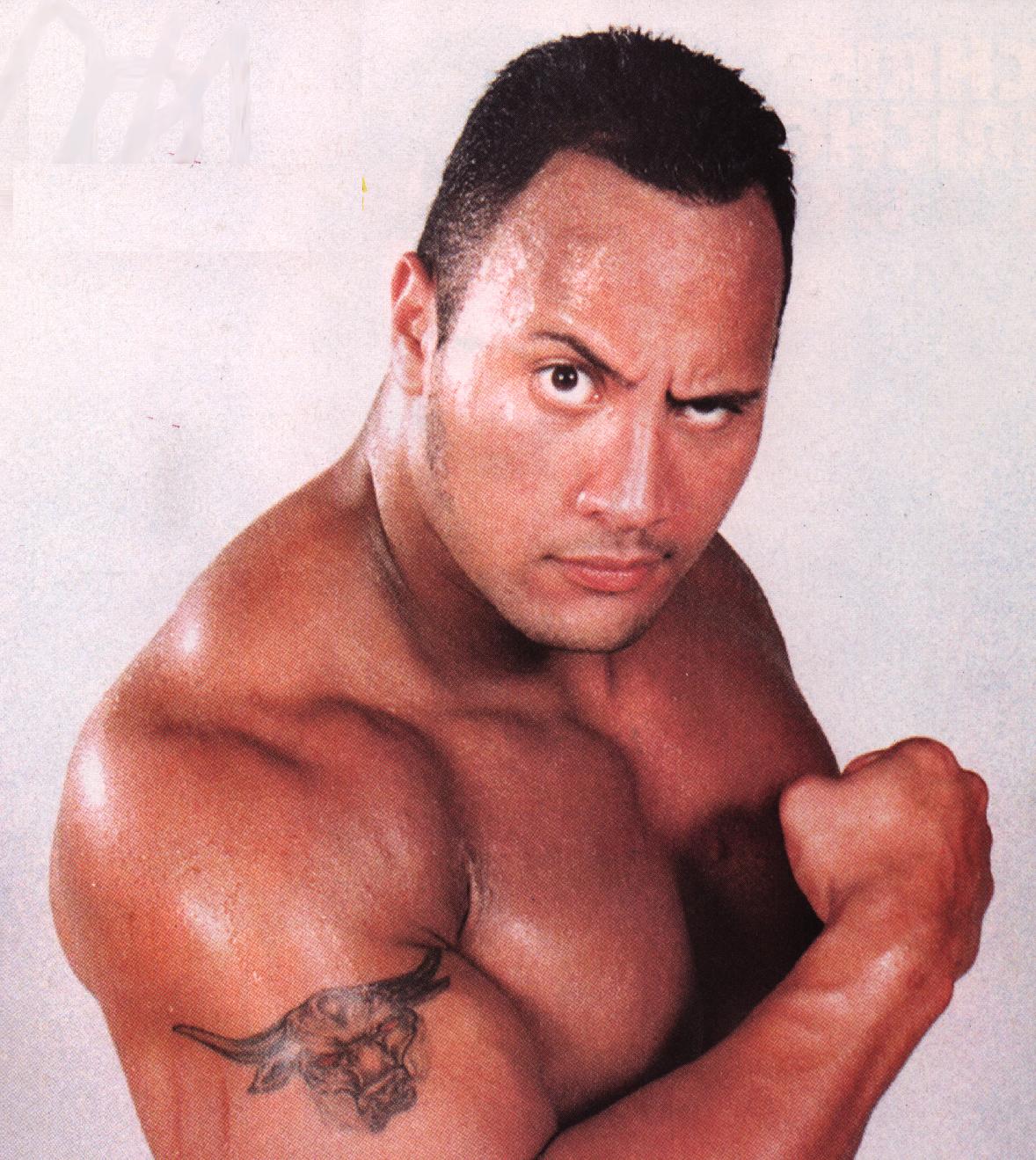
Just watch out for the kid doing a fair impression of The Rock's raised eyebrow.

Tuesday, April 21, 2009

On being an encourager's encourager

If you've been coming here for a while, you'll know that I am committed to being an encourager, enabler, empowerer. It's why I do what I do.

You will also know that I am a complete tigress when it comes to my kids. My view is that, until they are in a position to fight their own battles, their parents are the bottom line, the people on whom they must be able to depend to fight their corner for them. We have fought our kids' corner against ludicrous odds. Sometimes we have won. Sometimes we have lost spectacularly.

The point is that I will take on anyone or anything when it comes to my boys. My husband is nowhere near as combative as I am, but he backs me to the hilt when I take on an opponent he believes to be in the wrong. I play offence. He plays defence. It works. There was even an occasion when he needed me to go to bat for him, when he was in hospital and a series of administrative inefficiencies meant that he was not being discharged. I got him out within two hours. You may not be able to fight city hall, but the day may well come when I die trying! Many people have vowed that the day they need someone to fight their corner, they will make a beeline for me.

Maybe I should have been a civil rights activist or something ;o)

Of course, the boys have to learn to assume the mantel themselves, so, as they grow older, we encourage them to handle more and more on their own. We also accept support and input from other quarters.

And there's a flip side to all of this, which is why I am posting about this today. If you're prepared to challenge any and everyone to a duel when they do your kids wrong, you have got to prepared to make mention of the positive input you get, too.

My beleaguered elder son feels he has one solitary ally at school in the form of one of his maths teachers. Ms Verity. I use her real name simply because I find it so touchingly apt. Ms Truth. She sees exactly what is going on. She is not blinded by the antics of his tormentors. She speaks encouragement into his life all the time. She provides him with targeted worksheets that address his particular weaknesses in the subject. She builds him up at every opportunity.

When the pastoral teacher tried to intervene in the victimisation, things got worse. His mentor nods and says he understands but, according to my son, he clearly doesn't. He has implored me not to phone the man, predicting that I will be fobbed off with platitudes. So it's just us and Ms Verity.

Yesterday, I phoned to thank her for being such a stalwart. We had a wonderful heart to heart. She asked what else she could do, but we decided that to do any more would be to make it obvious that she was doing something. That would probably be no good thing. We discussed potential courses of action. We discussed the primary tormentor's tactics and the best way for my son to deal with her.

So there a few things here: first of all , there is a partnership between school and home - open, frank communication about our shared interest in a hurting young man. Second, there is a tailored approach based on the specifics of the situation. Instead of following the step by step protocol in the manner of the failed attempts by the pastoral support teacher. Third, and most importantly, there is a teacher who is going the extra mile... and a parent who is prepared to commend her for it.

There are real human beings involved in this story. Each of whom has expectations, quirks, strengths and weaknesses. A procedural approach can only go so far before one of those factors causes it to fall apart.

Trying to do things by the book has its limits. I am deeply grateful that Ms Verity has the courage to look past the book, see the human beings involved, and address the situation based on that.

I hope that my phone call yesterday has been encouragement to her to keep on keeping on.

Who will you encourage today?

Monday, April 06, 2009

On making allowance for the other idiot


These tweets from Andy Carvin resonated with me. People are often so focused on the results they're after, that they don't consider the risk to other people... or even sometimes themselves.

Just recently, my elder son was driving in proper traffic for only about the 5th time ever. We were passing a school, when the 4X4 in front of us suddenly slammed on anchors, right in the traffic. The passenger door opened and a woman got out. Then, as her husband drove away, she ran across the road right in front of us.

Our car was plastered with L plates to alert people to the fact that the driver was a learner. From this, one should deduce that the driver is not yet confident or competent enough to be expected to cope with unpredictable behaviour. But I have been astonished, since we started down this particular path, how many people do stupid things right in front of a car which bears indications that this might be a poor life choice.

Can you imagine the psychological impact on a teenager who has knocked down and injured or killed a pedestrian? Or who has ploughed into the side of a car that has jumped the lights, only to learn that said car was carrying a baby in the back seat? My mother had the misfortune to knock down two children who ran out into the street in front of her car, killing one instantly. It was two years before she could drive down that road again... and she had to have me in the car at the time (I don't know why it is that people often declare themselves brave enough to do things they had previously been too afraid to try, when I am with them!). My mother had been driving for decades at the time, and she knew beyond a shadow of a doubt that she had not been to blame. In the same situation, my son would have neither advantage.

It occurs to me that learning to drive is not just about learning to control a vehicle. It is not even about learning to control a vehicle in traffic. It is about learning to respond to what my own driving teacher (decades ago) called 'the other idiot'. The traffic is not a single entity. It is a collection of other drivers in other vehicles, as well as pedestrians, cyclists and the odd animal. Each driver has certain skills and weaknesses, certain quirks and idiosyncracies. Each vehicle has certain strengths and weaknesses. Each pedestrian has their own issues and distractions - like the woman who stepped out in front of my car recently as she chatted on her mobile phone, blissfully unaware of the test to my reflexes and my car's brakes. Fortunately for her, both passed!

There is always context.

And this is one of my hot topics. Teaching people skills in isolation is less than half the job. They need to know how to apply these. They need to know how these are relevant to them.

Yes, they should be figuring much of that out for themselves. But sadly, much teaching and corporate training doesn't encourage that kind of thought. We need to be different. We need to encourage and facilitate independent thought, whether our audience comprises adults or children. Whether we are delivering our learning face to face, online, 1:many, 1:1. Get people thinking, what does this mean to me? How am I going to use this? What other factors could have influence? What would I do then?

This means introducing far more questions into our andra/pedagogy.

Wednesday, March 18, 2009

On not laughing

Some years ago now, I worked in a learning centre which used government funds to provide really low cost IT skills training to the general populace. Most of our students were either middle aged women re-skilling to get back into the job market or senior citizens wanting to learn how to use computers.

The terminology was completely alien to especially the latter group and they adopted all sorts of approaches to try to make the jargon stick. Since many of them started out being utterly terrified of computers, it was important for us to encourage them at every turn, which meant not laughing, no matter what they came out with.

I kept a straight face through sloppy disks. Slippy disks. Flippy disks. Tick with the mouse. Broadsheets. Microsoft Exceed. Words. I didn't laugh when a lady tried to use her mouse like a remote control and point it at the screen. I maintained my composure through it all. Although sometimes it was tough, I reminded myself constantly to focus on the effort and the achievement, not the unwitting results.

Yesterday I was glad of it, when the young Korean lad who cleans my house to earn a bit of extra money while he attends a local language school came and asked please to buy "What is this?" He held out... oh no... a lint roller refill. I kid you not. He is the sweetest kid and so earnest and keen to learn. He tried very hard to copy what I was saying and, when he finally managed "lint row repew" I decided that was close enough. I was delighted that this little session emboldened him to ask another favour.

Apparently his English host family has asked him to say grace before the meal, and he would like to be brave enough to try. Would I please help? I wrote down a short prayer of the sort we say: "Lord, we thank you for this food. Bless the hands that prepared it and bless our fellowship. Amen."

He worked so hard at this, practising as he pottered about, that he made my heart swell. How the Almighty must have felt, being thanked so profusely for a future meal, I can only imagine!

As he left the house, he tried out his little prayer on me. I gave him the thumbs up and he set off with a broad grin.

Such a small thing. Yet it meant so much to him.

At times like this I wonder how many other teaching/learning moments we miss because we only notice the funny side of people's attempts to master a new skill.

Of course, I don't want to become so intense that I lose my sense of humour, but it was a sobering thought. I can't wait to find out how it went.

Tuesday, December 30, 2008

The pendulum swings

I have been pondering this Christmas. And this is what I have been pondering about.

You know how I have been banging on about how work-related learning solutions need to be focused on what people need to do in their day jobs, and we need to stop burying them in theoretical head-knowledge?

Well, I'm wondering if the pendulum hasn't swung too far in that direction in some sectors.

I recently spent an evening chatting to a head teacher and her teacher husband. Both are about my age. The head teacher especially was expressing concern about the sort of skills being imparted to trainee teachers at college. According to her, newly qualified teachers (NQTs) and student teachers are all very well versed in a procedural approach to teaching. Almost to the level of say x, then do y, then say z.

She explained how, when she was training, she learnt a lot about how children learn. About how people respond in certain situations. She used this theory to develop an understanding about the sort of conditions that would be conducive to learning and to inform her teaching practice. What she wasn't taught was a great deal of nuts and bolts "how to teach". Her view is that NQTs now come equipped with a great many focused procedural skills, aimed at assessing pupils against the national standards, but little initiative. While they have strategies to deal with situations, they have little understanding of how those situations might have arisen in the first place.

I have seen some of the learning materials aimed at providing CPD to teaching-practitioners, and a large proportion of it would seem to be back her argument: if x and y conditions are true, then proceed as follows, if not, then take this course of action.

In the past, it always seemed to me that work-related learning on offer to existing/qualified practitioners was action-based, whereas the preparatory learning undertaken in the formal sector provided the grounding in the form of underlying theories. Is this approach falling away as we become increasingly wedded to informal learning?

Let it be be said that I am a fan of action-based learning, just-in-time performance support and all the related mechanisms for empowering people to do their jobs without dragging them through a raft of teaching. But I wonder if we aren't getting a little lazy on the theory side. I have railed on about the 'what' and 'how' in the past, pointing out that the 'when' and 'why' are equally important. I wonder if, even in some of our preparatory programmes of study we seem to be overly focussed on the what, when and how and forgetting the why.

Is an excess of 'if this then that' not a return to a form of behaviourism? When every job becomes a box-ticking exercise, who will there be who understands why such-and-such a box has to be ticked? Who will then decide that perhaps such-and-such a box has passed its sell-by date?

This puts me in mind of a (possibly apocryphal) story I heard who knows where, about a business analyst recently brought in to streamline the processes within a long-standing manufacturing company in London.

He looked at the forms that had to be completed at each stage and identified several changes that could be made. On one form, there was a box in which the supervisor of every shift was dutifully entering 'O'. There was a blur next to the box that must once have been legible text, but copies of copies of copies had seen to it that it was now impossible to identify what was so consistently being rated 'O' every day. The man asked several of the supervisors and none could explain what the box represented. All they knew was what they had been told to enter in that box. Much detective work unearthed a box in a warehouse, which contained the original master copies of all the forms in use in the factory. It seemed that, every day, the shift supervisors were dutifully recording that manufacture had been interrupted by zero air raids that day!

If no-one knows why we do a thing, are we not placing ourselves at risk of 'this is the way it's always been done' with no-one having the courage to change something, just in case it turns out to serve some vital purpose with the potential to bring the business to its knees?

Just wondering.

Image acknowledgement: Pendulum by Phillie Casablanca

Tuesday, November 18, 2008

Good teacher, bad learners?

Today my elder son had to teach a lesson at school. It's part of their course on PE/sports science. His specialisation for the course is javelin and he was expected to teach his class how to throw a javelin within a single lesson. A tall order at the best of times.

When he got home from school today, I asked him how it had gone. "Not so good," he told me Apparently, the class hadn't paid attention or co-operated at all. His confidence, however, was unbowed.

"I still taught well, " he assured me, "Regardless of whether they learned anything or not."

Hmm. What it is to be seventeen!

I must remember that one if ever I run a workshop that doesn't go over well.

Thursday, October 30, 2008

If tomorrow never comes...♫ ♪ ♬

When I was a kid, we used to make the sarcastic crack, "Tomorrow has been cancelled due to lack of interest."

The Shuttleworth foundation has been working on a project called Kusasa, which is the Zulu word for tomorrow. The project was aimed at providing exploratory learning experiences for South African learners. It seems it has indeed been cancelled due to something that pretty much amounts to a lack of interest.

Very sad.

Thanks to Stephen Downes for the pointer.

Monday, October 27, 2008

Personalising learning

ICT Results e-zine has published an article that looks at the use of ICT for personalising learning using a system called iClass.

Initially, the developers tried to design a system that would replace teachers, only to find that this wasn't achievable. I like the idea of the teacher increasingly becoming the tutor/mentor. More guide on the side, less sage on the stage, but I don't think a no-teacher-at-all idea is going to fly any time soon.

At the moment, the tool is aimed at 14-18 year olds. This is cool, don't get me wrong. But I am getting incerasingly worried about what happens after 18. As I touched on in my earlier post today: we seem to be spending a lot of time and money encouraging higher order thinking and learning in our teenagers, only to drum it out of them when they hit the workplace.

The problem is that He-who-signs-the-cheque in the corporate world can't be doing with all this fuzzy research stuff, "What's it got to do with me? I just want my staff being more productive." Their focus is not conducive to a long term view on optimal learning experiences.

Wednesday, October 08, 2008

Listening

I've never conducted any quantitative research into the matter, but I suspect that what every human on the face of the planet wants is to be heard. It's when we wave away with an impatient and dismissive hand details that irk us or that strike us as noise that we exclude whole rafts of people for whom those details represent the core of things.

Relating to my earlier post: when we really listen to people, we are able to teach them, because we are able to provide them with learning materials that are appropriate. It is when we really listen that we gain insights that might just reveal the key to unlocking whole new vistas... for both them and us

When we enter a situation already knowing the answer, we deprive our learners of so much. We also deprive ourselves.

I suspect that, going into a situation in teacher mode is the mistake: I am going in there to give of myself sacrificially so that all those wonderful learners can acquire knowledge they didn't have before. Aren't I wonderful?

If I go 'in there' in learner mode first, I can find out so much about where my learners are on their learning journey. About what they already know. I can help them to see how much they already know. I can encourage them to share what they know with each other. I can help them to see their existing knowledge as valuable. To see that they have something to offer. I can meet with them on a whole different level. I can learn from them and find out what they need/want to learn from me.

I can achieve this by listening. Really listening.

This is my best friend in all the world. Once a year, she goes on a mission trip to the poverty-stricken mountain kingdom of Lesotho, where she works with the poorest of the poor. She does a lot of stuff that most other aid workers do the world over. But look at her face in this picture. This picture reveals exactly why she is my best friend in all the world. It reveals what it is about her that sets her apart from others.Lynda listens.

Almost without exception, people of my acquaintance who have visited a deprived community with a view to giving, have come away claiming to have received far more than they gave. Those with nothing (educationally, materially - it matters not) impart so much to those with plenty. But only if those with plenty are prepared to be humble enough to see it. To hear it. To receive it.

Are you? Am I? Are we listening to our learners?

Photograph by Justin de Reuck

Monday, June 02, 2008

True greatness from Paderewski

A musician friend of mine in Cape Town sent me this story today:

Wishing to encourage her young son's progress on the piano, a mother took her boy to a Paderewski concert. After they were seated, the mother spotted an old friend in the audience and walked down the aisle to greet her.

Seizing the opportunity to explore the wonders of the concert hall, the little boy rose and eventually explored his way through a door marked "NO ADMITTANCE."

When the house lights dimmed and the concert was about to begin, the mother returned to her seat and discovered that the child was missing.

Suddenly, the curtains parted and spotlights focused on the impressive Steinway on stage. In horror, the mother saw her little boy sitting at the keyboard, innocently picking out "Twinkle, Twinkle Little Star."

At that moment, the great piano master made his entrance, quickly moved to the piano, and whispered in the boy's ear, "Don't quit; keep playing." Then, leaning over, Paderewski reached down with his left hand and began filling in a bass part. Soon his right arm reached around to the other side of the child, and he added a running obbligato. Together, the old master and the young novice transformed what could have been a frightening situation into a wonderfully creative experience.

The audience was so mesmerized that they couldn't recall what else the great master played. Only the classic, " Twinkle, Twinkle Little Star."
When I think of how the great master might have reacted - what a hissy fit many great artists might have thrown - I am amazed. There's a lesson in there for all of us... and I won't patronise you by spelling it out!

Thursday, February 14, 2008

Thanks, Mr Watterson

A recent post of mine, and the conversation that has resulted from it set me to thinking how many times Calvin & Hobbes cartoons have come up in posts on this blog. Turns out it's ten - or eleven, if you include this one. One thing I know - it could have been a lot more, only I guess I was afraid of becoming a one-trick pony.

Although Bill Watterson has retired from cartooning (and apparently now enjoys fishing with his Dad and waterolour painting) his cartoons are probably as popular as ever. I have a link in my aggregator that delivers me a daily dose of the precocious 6-year-old and his stuffed tiger/imaginary friend. It's a long time since the link delivered a strip I haven't already read, but I am no less amused by the reruns than I was by the originals, and, in fact, I see more depth in them now that I'm not just looking for a laugh.

There is so much about learning and teaching in the strip, that I once joked that I could write my dissertation on the subject, whereupon, somone immediately pointed me to the blog Learning and Teaching with Calvin and Hobbes. But here's an interesting exercise: go to Google and do a search on learning teaching "Calvin and Hobbes", but just make sure your jaw has something soft to land on when it drops. I kid you not, there is a book on the subject!

So just for auld lang syne, here is a list of my posts which reference Calvin & Hobbes, starting with the oldest. Sadly, some of the links don't work anymore, so the cartoon being referred to is unavailable. This is a sad reflection on the whole copyright issue. Not wanting to infringe copyright, I used links in the early posts, rather than lifting the strip itself. However, this meant that the link was at the mercy of the site hosting the strip. When they removed the target (which is surely bad netiquette?), there were repercussions all the way over here on my blog. C'est la vie.

Friday, May 04, 2007

The value of "I don't know"

I've been thinking a lot lately about what constitutes effective teaching. Often I come back to the view that teaching is more about who you are than what you do. So yesterday I expressed the view that passion, zeal, etc. were more valuable to a teacher than having all the answers.

Today I'd like to speak out in defence of the phrase "I don't know". Some years ago, I met up with the woman who had taught me English and history during my final two years of high school. She confessed to me that her spelling was very poor, which was the reason for her stock in trade response when anyone in the class asked how to spell a word: she would point in the direction of the dictionary on the front table. The idea then was that the student had to find the word in the dictionary and then write it on the board. The truth was that she often didn't know how to spell the word and hoped to improve her own spelling through this sneaky tactic. The occasion was an old girls' reunion and there were several teachers in the room. This anecdote generated a round of similar stories, to much hilarity. The point being that revealing ignorance to your students was a bad move.

Looking back now, I wonder about this. Why is it so risky to admit ignorance? Why must a teacher seem infallible? Surely that sets artificial standards for the learners to aspire to? It jsut smacks too much of gamesmanship to my mind (non-sequitur: isn't it weird that "gamesmanship" and "sportsmanship" are often mutually exclusive concepts?)

I was recently in a meeting where the client asked a question. The question was answered by the provider - totally inaccurately. I was appalled. He obviously had no idea, but dared not risk exposing this fact to the client. I couldn't for the life of me figure out why he didn't simply turn the question over to someone on his team who knew the real answer. Similarly, if a teacher can't admit to a student that s/her doesn't know the answer, surely this opens the door to minsinformation?

If you don't know, but pretend you do, then you remain ignorant and your learner enters the world of thinking he knows when he doesn't.

I haven't always got it right, but when my learners asked me a question to which I didn't know the answer, the tactic I adopted was honesty: "I don't know, let's ask Google." "I don't know, does anyone else know?" "I don't know, why don't you try it and see?" "I don't know, let's check Help." "I don't know, but I will find out and email the answer to you. Would anyone else like to have that information?"

Even before I learned about clever things like peda- and andragogy, collaborative learning, constructivism, and all stuff, it seemed to me to be a logical approach to set the scene as being a journey we were all on together, and in which we could all learn from each other. I don't believe in lying to my kids, and I don't believe in lying to my learners. If you don't know, and say so, you create the potential for an outcome where you do know and where your learners know, too.

I can't see the downside.

Thursday, May 03, 2007

Looking at learning: the importance of caring

A paper I wrote for my Masters' course took me back to my early days as a classroom-based IT trainer, running courses in things like DOS 3.3, WordPerfect, Lotus 1-2-3 and the like.

My first taste of the world of IT training took place very soon after the first course I attended myself. This was way back in pre-history (well, 1989) and the trainer who ran my DOS course was atrocious. She obviously knew her stuff - there was no doubt about that, and by blindly copying her every action, we produced some very nice little interactive menus by means of which we could launch various apps on our PCs (using a function called edlin - for those who are interested).

But, in order to be able to use the operating system, one needed to know a fair amount about syntax. DOS had this infuriating little error message: Invalid command or filename - that popped up if your syntax (or your spelling or typing, for that matter) was less than exact. And screaming "But why?" at the computer elicited nothing helpful. I know. I tried. Smashing the keyboard repeatedly with both fists was equally fruitless. Rather than editing the autoxec.bat file, creating beautiful menus and writing little batch files so that we could automate the process of launching our software, what we needed to know was how to find files, how to create directories (read "folders"), how to delete files, copy files, how to format floppy disks, how to back up... that kind of stuff.

For some reason, I understood what the trainer was saying to us, and I spent the best part of the day explaining it to the rest of the class. One member of the class must have reported this on their happy sheet, because the very next day, I received the call to run the next DOS course. And so, somewhat serendipitously began what would become my career in learning and development. I would frantically work through the course manual to prepare for a course in an application I had never/hardly used before. I was quite often only one step ahead of my learners. Scary. But we muddled through, and they learnt how to use the help feature, the course material and the hard copy user manuals.

The sudden upswing in requirement for IT training meant that almost anyone with a certain level of proficiency could get drafted - I was a prime example. But quite often trainers were dire, and computer courses (as they tended to be known) were right up there with a trip to the dentist - necessary but painful. Why? Because having an understanding of the technicalities was no guarantee of an understanding of the learning process, or even of an interest in the learners' achievements post-training.

To my delight, it turned out that I was diferent. I was actually good at this. Occasionally, the sounds of my "class" laughing uproariously generated complaints from some of the other trainers, but by and large, the verdict was that learning about computers could be fun. After all, how many trainers do you know who explain absolute referencing in spreadsheets by
getting their learners to do a little dance?

Don't get me wrong, I might be blowing my own trumpet here, but I'm not claiming that I was unique - just in the minority. What made the difference was that I (and others like me) cared... a whole lot. We had empathy with the learner's position, and tried to approach things from where s/he was at.

Empathy. Passion. Enthusiasm. Zeal. These were the qualities we started with, and we learned the software skills along the way. Starting from the other end of the equation, in other words, starting with the software skills, was often a less successful tactic.

I have always maintained that skills can be learned - especially technical ones. But good teachers care about their learners. They are interested in seeing their learners take the baton and run with it. They care about their subject. They believe that the things they are teaching the learners are going to benefit them in some way. They become spontaneously animated when discussing matters related to their subject.

Recently, during a break in one of our sessions at university, one of my classmates (a music teacher) asked another of my classmates (a biology teacher) whether there was any truth to the rumour that margarine was so unhealthy that he might as well stick with oh-so-fattening butter. Her eyes lit up, she waved her arms, she drew pictures, she explained the molecular structure of margarine and what makes it unhealthy. He asked questions. He pointed at the pictures she had drawn. He made observations. I have no idea whether either of them bothered with tea that evening - they were in a little world of their own, and they were having FUN!