This is not a new post. In fact it's more than two years old now. Nevertheless, the conversations I follow have brough it bubbling back up to the surface again, nad it hasn't lost currency in the intervening period.
Stephen Downes compiled a list of 10 things you really need to learn. These are skills and attitudes that go way beyond the classroom/training room. Indeed, they tend not to feature in the curriculum for either of those two places, more's the pity. Then again, the responsibility rests in a child's early years with parents and family/community as well... and, in due course, with the individual himself. Note the list is not titled, things we really ought to be teaching.
Friday, October 31, 2008
Stephen Downes: ten things you really need to learn

Thursday, October 30, 2008
If tomorrow never comes...♫ ♪ ♬
When I was a kid, we used to make the sarcastic crack, "Tomorrow has been cancelled due to lack of interest."
The Shuttleworth foundation has been working on a project called Kusasa, which is the Zulu word for tomorrow. The project was aimed at providing exploratory learning experiences for South African learners. It seems it has indeed been cancelled due to something that pretty much amounts to a lack of interest.
Very sad.
Thanks to Stephen Downes for the pointer.
Wednesday, October 29, 2008
Customer service: a vote of confidence
Some years back, we bought a rather expensive combination oven. One that had a microwave, convection oven and a grill. Unlike most peopke who splurge on on of these, I didn't come to regret it within a few weeks. I used it almost every day. Then it went wrong, a few days (of course) after the warranty expired.
I took it in for repairs. What a brouhaha. After trying several different places, it seemed that the thing to do was chuck it and buy a new one.
The microwave I have now started life as a comination oven, too, but suddenly started making dreadful grinding noises one day when the convection oven was being used. Same story, it seems. One simply doesn't repair these things. The spares aren't available and no-one has the skills to work on them.
And it seems to be true of most appliances - or such has been my experience, anyway. Gone are the fix-it workshops that used to repair all manner of things.
When something goes wrong with your kettle, you buy a new one. When the iron gets tacky underneath, you buy a new one. When your DVD player starts to play up, you buy a new one.
By contrast, my vacuum cleaner broke the other day. It has this little clip thing that allows the extenion hose bit to revert to being part of the handle. It's a fairly reputable brand (and I'm broke), so I thought I just check out their website.
It seems you can buy pretty much every single part of every single one of their cleaners - even one that is several years old (like mine). I discovered that the broken clip-thing is called a wand release catch and goes for just £2.50 plus P&P. I ordered it forthwith.
I sang their praises for the next two days, telling everyone how their service indicated a confidence in their own product. That they expected the whole to last longer than some of the parts (sorry, dreadful play on words).
The catch duly arrived today and I snapped it in place with ease. I gave the cleaner an experimental push and then pulled it back towards myself. The 'wand' as I had now discovered it was called, came back without the cleaner.
Feeling cheated and disillusioned, I phoned the service desk (number prominently displayed on the side of the cleaner) to complain. The man asked me whether I had popped the spring in place. Spring? In spite of the fact that (as I then discovered) it says "Spring not included" on the order screen for the catch, I had not even noticed that I needed one. "Never mind," quoth the helpful man, "it happens a lot. I'll pop one in the post for you today. No charge."
Now that's more like it! This is service that, as I said, speaks of the manufacturer's confidence in their own product. They make themselves easy to find and, when you find them, they offer you a solution.
They used to run an ad campaign that said the every single new staff member had to go out on to the factory floor and build one of their vacuum cleaners. Everyone, from the most junior to the most senior member of staff has to know how they are constructed and what goes into them. Not only that, but they seem always to be innovating and thinking ahead.
It's official. I'm a fan. My next vacuum cleaner - assuming I ever need one, that is - will be another Dyson.
Moreover, I'm going to take a leaf from their book. I'm going to look for ways to provide that kind of service to my own customers.

Monday, October 27, 2008
When did 'follower' become a dirty word?
I have noticed a tendency lately for the word 'follower' to be equated with being a sheep, with being mindless. As if being a leader is the noble option and being a follower is for those who can't hack it as leaders.
But who does a leader lead if he/she has no followers? And does that leader despise his/her followers for being such? If so, I would venture to say that he/she is not worthy to lead them!
If you are in the position where you lead people, you can only do so effectively if you have their interests at heart, which you are unlikely to do if you hold them in contempt. There was a time when it was trendy and cool to draw organisational flowcharts upside down, indicating the increasing burden of responsibility resting on the shoulders of those in more senior positions. I still prefer to think of it that way. One of my great frustrations is when elected officials fail to listen to the wishes of the people they represent. As leaders, they have a responsibility. When they pay no attention to the wishes of those people and simply pursue their own agenda, they show an utter contempt for the people they lead. I rather childishly hope that the consequence is that they are removed from that position of leadership with the very next round of votes.
I don't see that being a leader and a follower are mutually exclusive, either. You might lead me in one thing, while I might lead you in another. Or you might lead on this occasion, while I might lead on another. It all depends on our skills and the situations in which we find ourselves.
For years I sang in the church band (note: not a choir - that's a different thing). The band had a leader. However, he didn't always lead the worship during the Sunday service. At least once a month, it fell to me to do that. At those times, I led and he followed. When he forgot (as he occasionally did - he was only human) and slipped back into the role of leader, things tended to go somewhat awry as some members of the band watched him and others watched me. Most of the time, though, he and I made frequent eye contact, so that I could let him know what I wanted to happen next.
But I quite often made a claim I maintain to this day: I am a gifted follower... when it comes to a musical context, anyway. Something I have learned is that you can only sing a harmony line if you pay attention to the melody line. It probably comes from years of singing in the school choir. There it was essential to watch the conductor like a hawk, so that we produced perfect harmony and synchronised the beginnings and endings of our words. I have become so practised at it, that I could read Frank's body language when he was leading on a Sunday morning. I knew exactly what he was going to do next, and I could follow him as he did it. Even now that we are in a new church where I am not in the band, I find myself able to read the leader's intentions better than the very young members of her band (no doubt, when they have more experience, they will do just as well).
When my sons were little, it was always important for them to be in front. They would go haring off... often in entirely the wrong direction. There is no point leading if you don't know where you're going. If I know where I'm going, I'm happy to lead. If I don't, I'd far rather follow... as long as the leader doesn't treat me with disdain!
Recently, my husband embarked on a new venture. He got together with a few like-minded individuals and they launched their initiative, which included appointing a leader. I was surprised that he was not that leader, but he was happy for the leadership to go to someone else in whom he had confidence. I'm sure everyone who was present recognises that John would make a good leader, too, but there needs to be one leader, and he was happy not to be it on this occasion. Knowing him as I do, he will give that leader cause to be grateful for his support before long - because he makes a good follower, too!
A good leader will be sensitive and open to suggestions. A good leader will not always impose his/her will on the group. A good leader makes it easy to be a follower.
A good follower makes it easier to be a leader.
When my kids were little and a game degenerated into squabbles, one of them would inevitably yell, "I'm the boss of this game!"
They were kids. What's our excuse?
Personalising learning
ICT Results e-zine has published an article that looks at the use of ICT for personalising learning using a system called iClass.
Initially, the developers tried to design a system that would replace teachers, only to find that this wasn't achievable. I like the idea of the teacher increasingly becoming the tutor/mentor. More guide on the side, less sage on the stage, but I don't think a no-teacher-at-all idea is going to fly any time soon.
At the moment, the tool is aimed at 14-18 year olds. This is cool, don't get me wrong. But I am getting incerasingly worried about what happens after 18. As I touched on in my earlier post today: we seem to be spending a lot of time and money encouraging higher order thinking and learning in our teenagers, only to drum it out of them when they hit the workplace.
The problem is that He-who-signs-the-cheque in the corporate world can't be doing with all this fuzzy research stuff, "What's it got to do with me? I just want my staff being more productive." Their focus is not conducive to a long term view on optimal learning experiences.
Free, free, set them free
This post constitutes part of this month's Working/Learning Blog Carnival, being hosted by Leean at Xyleme. The theme is "what do you find helpful (or harmful) to learners in the training environment".
Several conversations I have had in the past few days have come back to the concept of linear learning. Twice I have found myself exchanging views on Kolb's learning cycle, which can be roughly replicated as follows: The thing is, I'm not convinced that people follow the sequence so obediently when given the freedom to come to grips with a new concept or skill in their own way. I see no reason why a person, on having unexpectedly stumbled across a concrete experience, might not begin active experimentation, from which they might develop abstract ideas on which they then reflect, before reverting to more experimentation.
And why should experimentation and experience be two different things? Surely if I am experimenting with something, I am also experiencing it?
I might be persuaded to think that this is just further evidence of me at my maverick worst. However, when I wrote this post, I was reflecting on a learning experience I had shared with a classmate who didn't follow the prescribed flow either. In fact, I can honestly say that few members of my class at that time appeared to be following Kolb's path.
What I'm coming to is this:
I think that one of the most helpful things for a learner is space. The space to approach the learning in their own way - to progess it in a way that works for them.
By contrast, I would say that one of the most harmful things is prescriptive 'teacher' expectation. When a teacher/trainer/whatever expects learners to learn a concept by following x, y or z process, because that's the way he/she learned it, it closes so many doors to so many people.
I am not refuting the existence of Kolb's four phases per se. But I am skeptical that they follow the order that Kolb settled upon. I am also skeptical that those four phases are always present and that no other as yet unidentified phases exist. If a learner chooses to leap from phase to phase with reckless abandon, but it works for them, what of it?
We are not dipping sheep, after all!
One of my greatest concerns is that we seem to be trying to inculcate independent thinking skills in our teenagers, only to discourage it when they get into the workplace. I have a son who has just entered sixth form. These are the two optional school years that follow the general certificate of secondary education (GCSE) examinations in the UK. These two years culminate in A level exams, without which it is very difficult, if not impossible to get into university. During these two years, they are being taught the thinking skills that will stand them in good stead when they ascend the lofty halls of their chosen university. They are taught to think critically. They are taught that this is how adults (should?) think. That criticality reflects maturity and intelligence. Debate is encouraged. In a recent email to my family, I described my son thus:
He gets into these wild-eyed, hand-waving explanations of what he's learning about, and his theory of the universe, while his dinner grows cold and (his brother) chafes to be excused from the table. He would probably love to chat to (his uncle) about quadratic this and cubic that. His new school is far more academic than his previous school. Coupled with that is the fact that 6th form is not compulsory, so the kids that have stayed on tend to be those with an academic bent. On top of both those things, the subjects he's taking (PE/sports science, maths, physics, biology) are those in which the kids like to debate such weighty issues as the 11 dimensions of the universe and how every single point within the universe is the centre and how an already infinite universe can be said to be expanding and whether something can be said to be true when it one fails to prove that it is false and and and... and he's in the thick of it, debating, arguing... fulminating is probably the word we need, here! His teachers are encouraging him to think about ways in which his ideas can be corroborated, explored, substantiated. Which is great - a huge improvement on telling him to keep his mind on the prescribed syllabus!Now take this child and fast forward 10 years or so. Unless there have been radical changes in the way workplace learning is conducted, he will not be encouraged to do any of this questing, enquiring and fulminating. The passion that has been awakened in him in the short time since early September will be squished and squashed until he is able to obediently follow the back and next buttons of his company's elearning courses. He will be expected to demonstrate compliance as he sits through a host of one day workshops which will cover a raft of stuff he already knows, a raft of stuff he will never need to know and a smidgeon of stuff he will use... most of which he will forget before he comes to apply it.
After a few years of this, his eyes will glaze over when someone talks to him about learning and development. He will groan when the HR person calls to talk to him about the fulfillment of his CPD requirements for the year.
He will decide that learning is a trial. And this will be a Great Tragedy.
While I have been persuaded by neuroscientists that the whole left brain/right brain thing is tosh, I would say that pretty much everything else Ken Robinson has to say in this much viewed clip is on the money.
I honestly believe that every single one of us loves to learn, but many (most?) of us have had enough negative experiences along the way that involved square pegs, round holes and back-and-next buttons, so that we have persuaded ourselves that this is not the case. I am on a one-person campaign to remind every person I possibly can that they love to learn, and to find the hot button that will re-ignite that spark in their eyes.
Coming soon to a soapbox near you ;o)
Saturday, October 25, 2008
Locks of love
A further development in the story of 'the big snip'. Thanks to my sister-in-law in the USA, I have become aware of a charity called Locks of Love that accepts donations of hair to make hairpieces for underprivileged children who have suffered temporary or permanent hair loss for one or other reason.
While they cannot accept dreads or grey hair (sorry, Stephen!), they will accept any ponytail or braid (plait) that is made up of hair that is 10" or longer. If hair is layered, the longest layer needs to meet the 10" mark, and the hair can be donated tied in several separate bunches.
At this stage, we're unsure whether our son's hair will make the 10", but we're certainly going to look into it. It would be lovely to think that the hair that he has sacrficed for one charity can be re-used by another.
Friday, October 24, 2008
Making iStock lightboxes work for you
In spite of the shortcomings of so many iStock photos (whiter-than-white, straight teeth; everyone posing and smiling; distinct corporate bias; preponderance of US-centric images etc.), it remains a very useful place from which to source images for powerPoint presentations, user manuals and elearning materials. They not only stock photos, they also have an excellent supply of symbolic graphics which I find even better than the photos for PowerPoint slides and elearning pages.
But I've discovered that many people under-use the lightbox facility, so I thought I'd give a quick rundown on some of the advantages I've discovered. First let me explain what it is that many people seem to do instead. Bear in mind that lightboxes can only be created and/or used by those who have created a log in identity (how else is the system going to keep track of which lightbox is yours?).
What I've found is that many people will find a promising looking image and download a comp, or save the image with the protecting watermark across it to their own system. Perhaps to a folder on their hardrive, or to a network folder, where the project team members can all see it.
Using lightboxes allows you to do effectively exactly the same thing, except that this way, the metadata comes with the images, allowing you to search through them using a range of different keywords, rather than having to view each one individually.
Let me explain...
First - what is a lightbox?
This is a virtual holding space in which you can place images that you thing might be suitable for some or other purpose, at no expense to yourself. You can collect as many images there as you like and then come back to them later to decide which ones you're actually going to buy.
Creating a lightbox: So you've used the search facility and ben offered a gazillion images that might be appropriate. You've spotted one within that lot that looks promising. You've selected that image and are now on the screen from which you could choose to buy and download it. Just to the right of the image, you will see the section labelled File Tools. Select the option to Add to a Lightbox.
 This dialog box will open up. Since you don't yet have any lightboxes, yet, there is no option to use an existing one. If you already have a lightbox, the dialog box will be slightly different, but you'll get the idea. Enter the name for your lightbox, together (if you like) with a short description and a few keywords. I'm sure you don't need me to tell you that it's a good ide to give the lightbox a name that will make it easy to find again. If you're working on a presentation for a conference, or an elearning module for a project, why not use the name of the conference or the project? Hit Add, and in one fell swoop you've created a new lightbox and added an image to it.
Adding an image to an existing lightbox Once you've created one or more lightboxes, you can add images to them to your heart's content. Simply select the individual image, and use the option to add it to a lightbox. This dialog box will open. Use the drop down arrow to reveal your lightboxes and select the required one. as you can see, you can opt to add a new lightbox at any point.
Public lightboxes You can choose to make a lightbox public or private. I won't presume to tell you the circumstances under which you might choose one or the other. If an image has been saved to existing public lightboxes, this information will appear in the File Tools section. You may find it useful to trawl through those lightboxes to see if there are any other images that will suit your purpose - especially if it seems the lightbox was created to address an issue similar to yours.
Managing your lightboxes If you look at the banner across the top of your iStock screen, you will notice the lightboxes link. Use this to access your lightboxes (and to see the featured lightbox of the week). This page will tell you whether your lightboxes are public or private - they are set to private by default.
  Select Manage to edit the settings of your lightboxes.
Okay fine, so now I know how to do all this, how is it an advantage?
As I mentioned earlier, an image added to a lightbox takes with it all its metadata. So you could save yourself a lot of heartache by using the search facility within a lightbox rather than across the whole of iStock to see whether you already have an image that fits a specific bill.
If you do this sort of thing on a regular basis, your lightbox contents may start to number thousands. Imagine looking through thousands of thumbnails on your system for a specific image. Instead you can opt to run a search on your lightboxes, using a few keywords to pinpoint a specific image.
If you're working with a team, you could tell a team member that you're looking for images with a simiar look and feel to the ones in such and such a lightbox. The team member can then identify a few key words to help them source additional images of the same type.
If you suddenly need more images for a specific resource, you already know that you have a shortlist set aside in your lightbox, and you don't have to go and start again from scratch.
I hope this post will have been of help to a few people. Please let me know. If all I've succeeded in doing is raise questions in your mind, please pose them... someone out there (maybe even me) will have the answer.
Being unfazed
When I was a new Mom, one of the (countless) pieces of advice someone gave me was not to gasp when my son fell down. If I did that, it would give him the impression that something serious had just happened and he was more likely to be upset by it. The recommendation was that I should let him decide how much pain and/or distress he was in and then deal with that. I quickly learnt that a very reliable yardstick was the length of the pause between the first wail and the second: the longer it was, the greater the distress the lad was feeling.
As far as my child was concerned, I was solid ground. If I went to pieces, it must be catastrophic indeed! It was a tough one to master, because I am dramatic by nature (not to mention squeamish: I once passed clean out with my injured son in my arms, because his skull was clearly visible through a laceration on his forehead), but I did my level best.
Calvin's Mom obviously adopts the same approach - most Moms would be quite shaken to hear that their child had almost been eaten!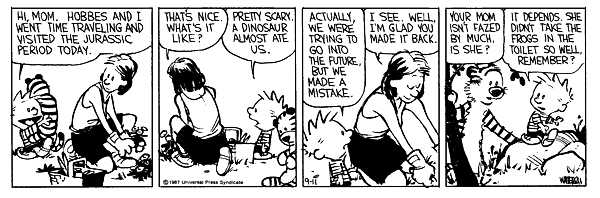
On more than one occasion I said gently to a nervous silver haired newbie, "Let's put this into perspective. This computer cost (insert figure here). That's a lot of money to spend on something that's going to blow up at the push of the wrong button, don't you think? What do think the chances are that the manufacturing company would survive if they built machines that did that?" I knew that they were in no position to understand a more technical explanation of why it was unlikely that the machine would burst into flame, should they accidentally hit Backspace instead of Delete.
I also learned not to show any distress when a user did something monumental. Few of them did, but it did happen occasionally. Much as my kids had done, the terrified user would be watching my reactions to gauge the seriousness of the incident. I do exactly the same on aeroplanes. I hate flying and am engulfed by fear every time the plane hits an air pocket. I watch the staff's body language like a hawk (and I'm pretty good at body language), alert for any signs that they are paying even the slightest bit of attention to the movement of the plane. They are my litmus. I knew that I was the litmus for my learners, too.
So even when a learner jammed a floppy disk into the CD drive. Even when a learner accidentally accessed a porn site (and it was accidental - she was mortified). Even when a learner started formatting the hard drive. Even when a learner spilled coffee all over her keyboard. No matter what they did, it was always an equable, "Oh dear. That's not so good. Let's see how we can fix this."
Our learners need our reassurance that nothing is beyond redemption - especially if they're new to a field or concept.
Legal tender

I have heard many tales of people being forced to walk because bus drivers won't change a £10. Now the legal tender issue crops up here again, but I can begrudgingly accept that a bus driver is (a) restricted as to the amount of cash he carries and (b) pressed for time.
But I really struggle with the idea that a shop can refuse to take legal tender. Surely that is breach of the law? Being me, although the situation had nothing to do with me, I asked this question of the cashier.
"It's because there's so much forgery," she explained. I looked at the poor woman who was trying to pay for her fuel. Of course, it's not impossible, but it seemed unlikely that she was a forger. If the note was indeed a forgery, it was more likely that someone had given it to her. Sticking my oar in even further, I asked, "And this is her problem?" The customer explained that her husband was increasingly being paid with £50 notes these days.
I don't know what kind of business he's in that sees him being given cash payments - perhaps he's a self-employed plumber or electrician. But of course the knock-on effect is likely to be that he will start refusing to take £50 notes if he and his family are unable to spend them anywhere.
I very seldom carry much cash - perferring to use a debit card, so I have only once possessed a £50 note and I used it within minutes to pay for my groceries. On that occasion, there was no fuss about the note (perhaps I have an honest face).
But I can't help wondering what the point is of a £50 note if you can't use it. And what are the implications of a business refusing to accept what constitutes legal tender?
And then, inevitably, my allegorical, analogous brain starting thinking about parallel situations in the world of learning.
Are there situations where we are providing our learners with information that has no practical value? Information that looks as if it will grant them access to all sorts of new delights and skills but, in fact, when they come to apply it, proves useless?
What's the point of that?
Just wondering....
Image credit: Talduras via photobucket
Wednesday, October 22, 2008
Looking at communities of practice
There are a lot of ideas out there about what constitutes a community of practice (I am avoiding capitalisation, because I don't want to formalise the concept).
Dave Cormier has posted a contribution to the conversation, which has attracted some interest from the... well... community. The title of the post refers to 'managing' a community of practice. The quotes are his.
I can relate to the need for those quotes. From where I sit, my community of practice comprises a group of individuals I have chosen to learn from. They are the bloggers whose blogs are listed in my aggregator. They are the individuals I hold in esteem within the world of learning professionals. Some of them might not even realise that I regard them thus. Some, indeed, my not even readily recognise my name.
So I don't actually exercise any management of the people. I manage the intangible entity that they constitute in my very subjective view of the world. I may add new 'members' or remove those whose work has taken them down a path no longer relevant to me. I choose to comment on their blog posts or not. I choose to follow (or not) the conversations among others that ensue from their posts. I engage with them in various spaces: Ning communities, Facebook, online programmes of collaborative learning, etc.
So in effect, what I am managing is myself. My own online activity. And in a way it amounts to pretty much the same thing.
I prefer it this way.
Were I to exercise any direct management over the people, I would have to take responsibility for the direction of their output. This would put an end to serendipitous learning. I would unwittingly restrict my own learning journey because I know not what I know not... until someone addresses the matter and draws it to my attention.
So, to my wonderful community of practice... those of you who know that you belong and those of you who don't... I revel in the knowledge that I have no idea where you're going to take me next, but I look forward to the ride.
After all, this blog is called Karyn's erratic learning journey.
Inculcating values
 "Mom, will you shave all my hair off?"
"Good grief. Are you sure?"
"Yes. I've decided to do it for charity."
"Which charity?"
"The Bobby Moore fund in aid of bowel cancer. Johnny's Mom just passed her 5 year all clear."
"Okay. I'll do it. On one condition. I get to keep the longest lock and one of those gorgeous corkscrew curls that suddenly pop out from nowhere."
So, after four years of growing it, my son has decided (seemingly out of the blue) to shave his head on a #2 setting. The big snip takes place on Saturday 8 November. There is a Facebook group, should you wish to join and contribute. If you're a UK based FB friend of mine, you have already been invited.
I shall be heartbroken to see those locks go - especially since I shall be the one wielding the clippers - but I am prouder than I can say. I tried to persuade him to let me style it into something trendy, but he is adamant that, when you do something for charity, it has to be extreme and it has to be a sacrifice. Rendering yourself bald at the beginning of winter strikes me as ticking both those boxes!
Tuesday, October 21, 2008
Why I like cryptic crossword puzzles
I'm not very good at identifying the different types of '-uctive' reasoning (adductive, deductive, reductive...), but I do like to exercise them. There is a UK newspaper I buy purely for the puzzles. I have no time for its sensationalist right wing politics, but it has a 4 page spread of the best puzzles. I buy the paper, take out the middle pages and recycle the rest. Because this is a monumental waste and distinctly un-green, I restrict myself to buying the paper only when I have a longish train journey to make.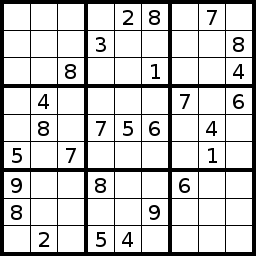

But my greatest love, by far, is crosswords. Usually, when I say this people picture this kind of thing.
What I like is a kind of crossword that seems peculiar to England and a few of its ex-colonies. The cryptic crossword puzzle. My husband, the techie, fails to see the point, which is kind of sad, because I had fond notions of the two of us solving the morning crossword over toast and tea in our twilight years. Sigh. Bliss. To my mind, it involves the same sort of reasoning involved in programming. But I've never been a programmer, so perhaps I'm wrong about that.
Every day, my husband dutifully brings home a freebie paper distributed during the homeward journey. He does the sudokus on the train... which I tolerate ;o) and I do the crossword in bed before I turn off the light.
I'm not altogether sure what sort of reasoning is involved, but the answer is always in the clue somehow. For example, in the clue "Spoil in a remarkable way (3)" the answer is concealed. In the clue "Healthy spasm (3)" we're dealing with a bit of wordplay to come up with the answer: fit. Another example of which is to be found in my favourite clue from Monday's paper this week: "Dejected - no liquor left! (3,2,7)" to which the answer, in case you're interested, is out of spirits. Sometimes the answer is hidden, sometimes it's an anagram, sometimes it involves a bit of lateral thinking.
The daily cryptic crossword was a feature of my childhood. My mother is a crossword junkie, so she was regularly to be seen poring over the puzzle.
When the extended family gathered at my grandparents' home for the Christmas holidays, with all 14 of us under one roof (bear in mind that it was the height of summer, so this might involve some people camping out on the front lawn, or in the garage), the daily crossword was completed as a team exercise. I had no contribution to make...yet... but I loved the conversation that ensued. I loved the collaborative problem-solving. The brainstorming that generated some ridiculous suggestions (some of which turned out to be correct!). The cameraderie, the pursuit of a common goal. The good humoured bickering when one person got the the puzzle first and solved it before anyone else had got a look in.
These are drivers I have brought with me to the field of learning. Call me an idealist if you like, but I have seen it in action. I have seen people engaged in team problem solving... and it worked so well, even when the last clue remained stubbornly unsolved, that it remains one of my fondest memories to this day.
So to end... a few cryptic clues for you to solve. I will publish the results in a comment on this post, so you can choose to see them or not. After that, I will curl up in a sunny corner (yes, the sun is shining) with a cup of tea and today's puzzle.
Oh... and if anyone can tell me what kind of '-uctive' is involved, I'd be thrilled to learn... as long as it isn't unproductive!
- Negligent about a girl (6)
- A church provides and unbeatable service (3)
- Finish sketch for a particular purpose (4,2,2,3)
- Perhaps gravity caused him to add fresh weight to science? (6)
- The practice of the American era (5)
Dumpster diving
Do you ever check your spam folder? Most of us have set up some kind of protocol to protect ourselves from spam. You probably have a folder into which suspected spam gets diverted by your email app. Do you ever check what's in it before purging it?
I have found that, in between the offers for viagra and various other products that promise to enlarge a body part I don't possess to begin with, a few other fish have been caught in that net.
Of course, there is junk mail that comes from various suppliers who have my address because I am their customer. Not strictly spam, but I'm usually happy for those to get dumped.
But occasionally, just occasionally, an email of consequence will find itself peremptorily identified as spam and sectioned off within my spam folder. I recently rescued an invitation to tender out of my spam folder.
Let's face it, whatever algorithm is being used to identify spam isn't going to be 100% accurate. So it's worth just checking what's in there before hitting 'empty spam folder'.
There was an occasion a while back when I felt I had something deep and meaningful to say in response to one of Stephen Downes's blog posts (in as far as anything I say is deep and meaningful, of course), but when I hit 'submit' it told me that I was spam and I should go away... literally. He has genuinely set up a response along the lines of "That's spam. Go away." Quite restrained, I thought.
I tried wording my comment slightly differently, with the same result. I ruefully decided to take it as a 'Sign' and backed off. Presumably I had used a word that had set the alarm bells ringing. No big deal: if what I had had to say had really been deep and meaningful, no doubt I could have contacted Stephen some other way to say it. The point I am trying to make is that no automated screening process is flawless.
It's worth bearing in mind that our sophisticated systems are still not quite up to the vagaries of human communication, and not to abdicate all responsibility to the automated process.
Of course, what you don't want to do is go opening those messages that have been set aside as spam. But it's worth just checking the senders and subjects before emptying the folder... just in case!
It'll be interesting to see if the repeated use of the word "spam" in this post brings your system's virtual bouncers down in it... although I can't imagine that real spam admits to it. That would be a bit like a peeping Tom wearing a sandwich board advertising his hobby.
Monday, October 20, 2008
Are you a mean parent/teacher? Good for you!
Someone sent this to me today because they believe I fall into the category of 'mean Mom'. My sons agree wholeheartedly.
I'm flattered.
It reminds me of an exchange of comments I had with Janet Clarey recently when she posted a photo of the magnificent view from her newly refurbished kitchen on Facebook. We decided that I am a battleaxe.
I reckon it's just as valid for teachers, and it reminded me of Mrs Ewert. She was my teacher when I was in the equivalent of grade 5. Until I was placed in her class, I feared and loathed her, along with the rest of the school... except those who were in (or had been in) her class - they unequivocally adored her.
Mrs Ewert was strict. Very strict. She held kids accountable and woe betide if she caught you doing something wrong. On the other hand, if you were prepared to apply yourself, you found that she was a born encourager and you got to see up close the real love in her eyes for the kids she taught.
When she left to go an maternity leave, part way through my year in her class, we sobbed bitterly. Somehow, during that time, we had gone from loathing her to being fiercely loyal. Like every class of hers before us, we would brook no criticism of our teacher from those who had not had the privilege of getting to know what she was really like.
And so, to all the mean Moms/Dads and teachers out there...
Someday when my children are old enough to understand the logic that motivates a parent, I will tell them, as my Mean Mum told me: I loved you enough . . to ask where you were going, with whom, and what time you would be home.
I loved you enough to be silent and let you discover that your new best friend was a creep. I loved you enough to stand over you for two hourswhile you cleaned your room, a job that should have taken 15 minutes.
I loved you enough to let you see anger, disappointment, and tears in my eyes. Children must learn that their parents aren't perfect. I loved you enough to let you assume the responsibility for your actions even when the penalties were so harsh they almost broke my heart.
But most of all, I loved you enough . . . to say NO when I knew you would hate me for it. Those were the most difficult battles of all. I'm glad I won them, because in the end you won, too. And someday when your children are old enough to understand the logic that motivates parents, you will tell them.
Was your Mum mean? I know mine was. We had the meanest mother in the whole world! While other kids ate candy for breakfast, we had to have cereal, eggs, and toast.
When others had a Pepsi and a Twisties for lunch, we had to eat sandwiches. And you can guess our mother fixed us a dinner that was different from what other kids had, too.
Mother insisted on knowing where we were at all times. You'd think we were convicts in a prison. She had to know who our friends were, and what we were doing with them. She insisted that if we said we would be gone for an hour, we would be gone for an hour or less.
We were ashamed to admit it, but she had the nerve to break the Child Labor Laws by making us work. We had to wash the dishes, make the beds, learn to cook, vacuum the floor, do laundry, empty the trash and all sorts of cruel jobs. I think she would lie awake at night thinking of more things for us to do.
She always insisted on us telling the truth, the whole truth, and nothing but the truth. By the time we were teenagers, she could read our minds and had eyes in the back of her head. Then, life was really tough!
Mother wouldn't let our friends just honk the horn when they drove up. They had to come up to the door so she could meet them. While everyone else could date when they were 12 or 13, we had to wait until we were 16.
Because of our mother we missed out on lots of things other kids experienced. None of us have ever been caught shoplifting, vandalising other's property or ever arrested for any crime. It was all her fault. Now that we have left home, we are all educated, honest adults. We are doing our best to be mean parents just like Mum was.
I think that is what's wrong with the world today. It just doesn't have enough mean mums!
Friday, October 17, 2008
Virtualising your PC for free
It's a good thing I sleep with my IT support man (have done for the past 20 years), because he finds all sorts of Clever Things that I should do... and then does them for me.
The latest Clever Thing is an article by David Fearon in October's edition of PCPro on how to virtualise your PC free of charge. The article explains how you can convert a Windows XP PC to a virtual PC and run it on a Vista machine. This results in the exact state of the old machine being replicated onto the new machine, where it can be used full screen exactly as if you were using your old machine - a ghost within a ghost, if you like.
To be honest, it's my husband's area of expertise, rather than mine, but the way the article is written, I swear I could do it if I had to. There is a series of twelve screen dump images talking you through the process.
Of course, someone will inevitably ask the question "Why would you want to?" and to that I can only give the answer that applies in my situation. I have just bought a new laptop for Learning Anorak, but I still have a machine on loan from one of my clients. The thing is, I need that machine's state to finish the project I am working on for them. This way, I can virtualise the machine onto my new laptop (oh, alright, my husband can do it), return their machine, but still have it.
A bit "have your cake and eat it, too."
The eyeballing game
Thanks (I think!) to Stephen Downes for the pointer to this today. Great fun. Except that I have work to do, darn it!
You have to judge by eye where three lines will converge, where the centre of the circle is, etc. and the system rates your margin of error. As with golf, the lower the score, the better. Of course you just know that I wouldn't have pointed to this if I hadn't kicked butt at it ;o)
Thursday, October 16, 2008
Who I read update
Some time ago, I posted about whose blogs I was reading on a daily basis, which folks appeared to find useful. Yesterday I twice found myself recommending blogs that I read, so I thought the time had come to do a bit of an update. I will restrict myself to those which did not appear in my last list, unless a previously listed blog deserves a special mention for some or other reason:
For general inspiration, and usually unrelated to my field, I have a daily dose of: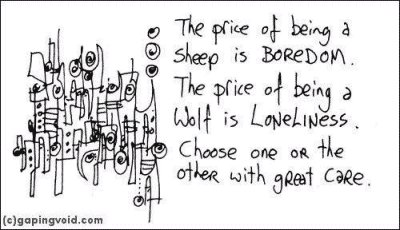
Head Rambles (severe language warning). A pseudonymous, award-winning blog penned by the hilariously cantankerous Grandad. He's not really as cantankerous as he would have us believe, though, and occasionally reveals his warm, fuzzy side, which he attempts to cover with bluster.
More closely related to learning:
blog of proximal development. Konrad Glogowski is a passionate learning professional seeking ways to understand the challenges facing the developing world and to address them. He has recently returned from a trip to Africa, and is currently writing about issues very dear to my heart.
e4innovation. Grainne Conole (GRON-yeah coNOlee) is Professor of e-learning at the Open University. She is a somebody on the learning scene. The first time she commented on my blog I nearly got the vapours. One of my colleagues emailed me to say: Wow! Grainne Conole reads your blog! You've arrived! Unfortunately that proved to be no more true than the first time Stephen Downes gave me a shoutout. I guess you just gotta make it on your own worth ;o)
e-Luminations. Kobus van Wyk (KWUHbiss fun VAYK) is involved in an initiative that seeks to address the technological inequity faced by teachers in the poorer parts of South Africa. A worthy cause indeed, encountering obstacles most of us wouldn't even think of!
Experiencing E-learning. Christy Tucker has become one of an increasingly tight-knit group of ladies I meet in all sorts of spaces. This group also includes Wendy Wickham, Cammy Bean and Janet Clarey. We play online Scrabble derivatives against each other in Facebook. We comment on one another's photos, take an interest in one another's families and encourage one another on a personal level. That is not what makes Christy's blog worth reading - what does, is that she thinks out loud on her blog about her own experiences, which many of us share with her.
Growing changing learning creating. Just the title of Tom Haskins's blog should pique the curiosity of any innovative learning professional. He and I had an early run in, when I challenged him on one of his posts about blogging some time ago, but that doesn't prevent his reflections from being worth reading. In fact, unless we want to live in echo chambers, we should take care to engage in conversations where disagreement is expressed.
Jane's E-learning Pick of the Day. I can't believe I left Jane Hart off my last list! What was I thinking? She genuinely provides a service to the L&D community by reviewing a useful tool every single day, many of which are free. She also compiles lists: tools favoured by the community; L&D Twitterers; Social networks for L&D professionals, you name it!
Learning. Not the most frequent of bloggers, Lynn Wernham often points to and reflects on posts she has read, allowing readers to leapfrog to conversations they might otherwise have missed - particularly if they share her passion for coaching and mentoring in the workplace.
Learning Design and Performance Improvement. The newly capped Master's degree holder, Benjamin Hamilton shares his reflections on emerging technologies. .. although he has been AWOL since June. You still out there, Benjamin?
Making Change. Cathy Moore is possibly my favourite 'talk sense, provide practical advice' blogger in the whole world. I think I have shown so many people her action mapping post that anyone who hasn't see it must have been in a coma! Cathy grasps the reality that workplace learning is about change and tackles that fact head on... with cracking illustrations!
Neurophilosophy "is a weblog about molecules, minds and everything in between". There's a lot that happens on this blog that I don't understand - Mo Costandi is on a different plane from me - but those posts I do understand blow my socks off every time. I have learned a lot more about the brain than I would have thought my own brain could handle, largely because Mo writes so well and so accessibly.
Technogenii's blog. I met Kristina Schneider through a Facebook group and wound up becoming one of her interview subjects for her dissertation. We share a passion for the use of social media in corporate learning. Like me, she experienced her ups and downs on the journey to her Master's degree. Unlike me, she has now submitted her dissertation!
The Rapid eLearning Blog. Tom Kuhlman is an Articulate whizz. He should be. He works for the company! many organisations have reached the koolaid point on Articulate and are wielding it something like the hammer that makes everything look like a nail. While I don't think it is as universally applicable as some would have us believe, Tom provides such usable, practical ideas, that I find myself tagging just about every post he writes!
Group blogs:
Work Literacy. This "is a network of individuals, companies and organizations who are interested in learning, defining, mentoring, teaching and consulting on the frameworks, skills, methods and tools of modern knowledge work."
Workplace Learning Today is a Brandon Hall initiative exploring issues that the title suggests "coordinated by Gary Woodill... with contributions from Janet Clarey... Richard Nantel... and Tom Werner"
Wednesday, October 15, 2008
Blog action day 08
Today is blog action day. The topic this year is poverty. Of course, victims of poverty are not able to access this conversation, so we need to be careful not to adopt a "let them eat cake" attitude.
I don't really feel qualified to make a meaningful contribution to the conversation, since I have been blessed with a life of (relative) privilege.
However, while you're here, may I ask one favour?
If you have the means to be reading this post, then you have means above and beyond the wildest dreams of the vast majority of the world's population. Please consider using those means to access an online charity related to poverty and make a donation. If you can't think of any charities, I shall list some at the end of this post.
Alternatively, swing by your local Oxfam or Sally Army with a bag of clothes or children's toys. To put things into perspective: I once asked a friend who worked with a poor community near Cape Town if she could use some of my kids' old clothes, or if they were too shabby. Her response was: "The worst thing you have ever thrown away is better than the best thing they have ever owned."
A representative of MAF was recently explaining to us how the spiralling cost of fuel was crippling their efforts... and how the poorest people groups are so poor that they have no concept of things like the credit crunch and recession. They still see us as being unspeakably wealthy and expect us to continue the same level of provision. They consider it churlish of us to send them less medication and fewer doctors simply because our wealth has dropped from stupendous to astonishing.
Projects to consider (in addition to the links included above):
Wonlife
tearfund
World Vision
Christian Partners in Africa
Mercy in Action

Slightly slow, slightly high and slightly fragile
Yup. That's me. Don't believe me? Check it out! Thanks to Stephen Downes and Beth Kanter for the pointer to this calculator of my Twitter influence or Twinfluence. I have no idea what it means, but I think I shall ask for it to be engraved on my tombstone!
Subscribe to:
Posts (Atom)